7 month child Seeking Finance for Cardiac Disorder- Donate Some Money To save Child


Aniya –  7 months old from Aligarh is suffering from a rare cardiac disorder called Truncus Arteriosus and requires repair through surgery. Her father works in a garment shop and earns Rs 3500 per month. The surgery is due to take place at AIIMS, New Delhi and will cost approximately Rs 1.3 lakhs.
Bank Account Number: 014500501536190001

Bank Name                   : Catholic Syrian Bank


Assistance                   : 100-800-6888

Paypal A/c: pravinatnl@gmail.com
Continue Reading

Donate Daisy Player For Blind Sudents

Donate a DAISY PLAYER for reading talking books to a blind student

Your donation will be used by Chaity Club Trust as follows:
Andhjan Kalyan Trust
Blind student can listen to recorded material in DAISY format through a supported player. DAISY (Digital Accessible Information System) is a technical standard for digital audioBlind student listening from DAISY format player
books, periodicals and computerized text. DAISY is designed to be a complete audio substitute for print material and is specifically designed for use by people with print disabilities, including blindness, impaired vision, and dyslexia.
The students can record lectures and read books through the player which records in DAISY format. This provides a a unique navigational system through which a reader can easily and quickly, access the material not only chapter wise, section wise or subsection wise, but also page wise. They can reach the required heading/page/section almost effortlessly within no time. This system is economical as well as portable. Students can also take the note of the lecture through recording.
Your donation of Rs. 7900($125) will be used to purchase a DAISY format player for the blind person at the Andhjan Trust. 

Bank Account Number: 014500501536190001

Bank Name                   : Catholic Syrian Bank

Assistance                   : 100-800-6888
Continue Reading

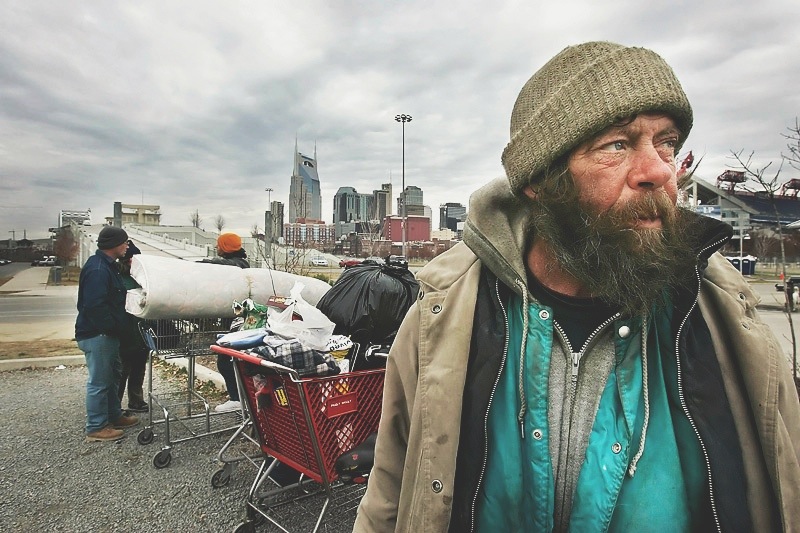
46 MILLION AMERICANS LIVE IN POVERTY EVERY DAY. POVERTY AWARENESS MONTH

It may not be noticeable to the naked eye, but if you take a closer look, you'll soon learn that more than 46 million Americans live in poverty every day (Source: povertyusa.org). It's a heart breaking reality that though America is the land of opportunity, it still suffers from such brokenness as poverty.
The statistics are staggering and quite painful, but even in the darkest hour, there is hope. Here is a list of ten organizations and communities that are not only shedding light on the issue, but also working hard to bring healing to those in America and around the world.
1. Kiva
A non-profit organization with a mission to connect people through lending to alleviate poverty. Leveraging the internet and a worldwide network of microfinance institutions, Kiva lets individuals lend as little as $25 to help create opportunity around the world. Learn more about how it works. 100% of every dollar you lend on Kiva goes directly towards funding loans; Kiva does not take a cut. Furthermore, Kiva does not charge interest to our Field Partners, who administer the loans.Get involved.
Connect via Facebook and Twitter.
2. Feeding America
Feeding America is a nationwide network of more than 200 food banks that leads the fight against hunger in the United States. Together, they provide food to more than 37 million people through 61,000 food pantries, soup kitchens, and shelters in communities across America. Feeding America also supports programs that improve food security among the people they serve; educates the public about the problem of hunger; and advocates for legislation that protects people from going hungry. Individuals, charities, businesses and government all have a role in ending hunger. Donate. Volunteer. Advocate. Educate. With such a great organization, together we can all solve hunger. For more information on how you can fight hunger in your community and across the country, visitfeedingamerica.org.
Connect via Facebook and Twitter
3. Poverty USAPoverty USA is an initiative of the Catholic Campaign for Human Development. CCHD is the domestic anti-poverty program of the US Conference of Catholic Bishops, working to break the cycle of poverty by helping people help themselves. Each year CCHD distributes national grants to more than 200 organizations developed by grassroots groups of low-income persons, working in dioceses throughout the country. Since its beginning, CCHD has provided more than 9,000 grants nationwide. Learn more.
Connect via Facebook and Twitter
4. Meals on Wheels Association of America
Senior hunger in America is a monumental problem.  The latest research reveals 8.8 million seniors in the United States faced the threat of hunger.  Looking at the numbers, it is easy to become discouraged. Looking at the people whom the numbers represent, however, impels us to action and helps develop our plan.  Because of the magnitude of the problem, we know that we cannot solve it overnight or with a single project or initiative. Learn more and make an impact.
Connect via Facebook and Twitter
5. End Poverty 2015
End poverty by 2015. This is the historic promise 189 world leaders made at the United Nations Millennium Summit in 2000 when they signed onto the Millennium Declaration and agreed to meet the Millennium Development Goals (MDGs). The MDGs are an eight-point road map with measurable targets and clear deadlines for improving the lives of the world's poorest people. World leaders have agreed to achieve the MDGs by 2015. The United Nations Millennium Campaign supports and inspires people from around the world to take action in support of the Millennium Development Goals. Join the UN Millennium Campaign and be part of the generation that puts an end to poverty.
Connect via Facebook and Twitter
6. No Kid Hungry
Nearly 1 in 5 children in America are at risk of hunger, and while their hunger is invisible, the solution is not. No Kid Hungry along with community members seeks to end child hunger in America. Share Our Strength® is a national organization that works hard to make sure no kid in America grows up hungry. They weave together a net of community groups, activists and food programs to catch children facing hunger and surround them with nutritious food where they live, learn and play.
Connect via Facebook and Twitter
7. Food Bank for New York City
There are 2.6 million New Yorkers who experience difficulty affording food — an astounding number and one that continues to increase as the donated food supply drops to an all-time low and food costs skyrocket. To address this issue, Food Bank procures and distributes food to a network of more than 1,000 community-based member programs citywide, helping to provide 400,000 free meals a day for New Yorkers in need.  Learn more and get involved here.
Connect via Facebook and Twitter
8. American Poverty
AmericanPoverty.org is a non-profit alliance of photojournalists using visual storytelling to raise awareness about “how the other half lives.” Joining us are renowned American writers, filmmakers and educators, all of whom seek to alleviate poverty and make it a national priority. Their philosophy is that, together we are working to dispel stereotypes and encourage actions that can create lasting impact in the lives of disadvantaged people.
Connect via Twitter
9. CARE USA
CARE is a global poverty-fighting organization with an emphasis on women's empowerment. Their mission is to serve individuals and families in the poorest communities in the world. Drawing strength from our global diversity, resources and experience, we promote innovative solutions and are advocates for global responsibility.
Connect via Facebook and Twitter
10. Oxfam International
Oxfam America is a global organization working to right the wrongs of poverty, hunger, and injustice. They save lives, develop long-term solutions to poverty, and campaign for social change. As one of 17 members of the international Oxfam confederation, we work with people in more than 90 countries to create lasting solutions. Learn more and get involved here.
Connect via Facebook and Twitter
Please continue the conversation by sharing how you are fighting poverty and the organizations you support.
Photo credit: Hands On Blog



Continue Reading

Street children Crisis

Child Line is a 24 hour emergency phone service for children in difficult circumstances. Any child in crisis can dial 1098 free of cost and speak to a friendly, experienced counsellor.
The service seeks to aid any child below the age of 18 who is injured, sick, exploited, abused, in danger, or lonely. They may be street children living on the pavement or railway station, or normal children with normal families. Parents often call in search of a missing child.

21001 children were helped by our Child Line service in 2008.


Childline: A helpline for street children

Many children who call simply require information, advice or someone to listen, but in more acute instances I-India sends out its ambulance. In these cases it might be that only medical care is needed, but where the child has been abandoned or run away from home, intervention is often required. Child Line personnel will attempt to locate the family of the child and unite them. If this is not possible, or not in the child’s best interests, then the child can stay indefinitely in one of I-India’s homes. Occasionally, a child may be referred to another concerned organisation.
Child Line represents a safety net to thousands of children every year. It was established in 1996 in Mumbai by the Tata Institute of Social Sciences and now operates in 83 cities across India. The service began in Jaipur in 2000 and its primary operator there is I-India. I-India has an excellent track record in running the program and police and hospitals frequently call on behalf of children needing assistance. We operate the service 24 hours a day from an office on our Child Inn campus. Our staff are also engaged in public awareness and outreach activity.

The program’s chief donors have been: Child Line India Foundation, Ministry of Social Justice and Empowerment, Unicef and corporate sponsors
Continue Reading

What Cancer Patients Need to Know About the Opdivo Approval

Now that Opdivo (nivolumab) has been FDA approved for two cancer types, and potentially more in the coming months, many patients are wondering: what’s next?
Bristol-Myers Squibb (BMS), the maker of Opdivo, has put out a series of publications geared towards patients interested in this new therapy, which are available on a new informational website.
I’ve compiled some FAQs here, for an Opdivo primer:
Is this treatment for me?
Opdivo has been approved for the treatment of lung cancer and melanoma in certain patients.
Cancer TypeIndicationEffectiveness
Lung cancerOpdivo has been approved for patients with a specific type of lung cancer: metastatic squamous non-small cell lung cancer (NSCLC). About 85% of lung cancers are NSCLC, and 25-30% of those are squamous NSCLC. The caveat is that it is approved as a second line treatment – meaning, the patient must first be treated with platinum-based chemotherapy, but the cancer continued to grow or spread.
In one study, it was found to have a 41% reduced risk of mortalitycompared with chemotherapy.
Source.
MelanomaOpdivo has been approved for patients withunresectable (cannot be removed surgically) or metastatic melanoma who no longer respond to other drugs.
In one study, it was found to have a 58% reduced risk of mortalitycompared with chemotherapy.
Source.


 What if I have a different type of cancer?
If the current indications don’t apply to you, don’t lose hope – Opdivo and other checkpoint inhibitors are currently being studied for dozens of cancer types in clinical trials across the United States and around the globe.
And don’t lose sight of other FDA approved checkpoint inhibitors, like Yervoy (ipilimumab) and Keytruda (pembrolizumab), which are currently approved for melanoma and in clinical trials for other cancer types.
Will I be able to get this treatment right away?
In theory, yes, you should be able to begin receiving the treatment right away. Although I have heard, via patient message boards, of some delays with treatment centers securing the drug.
What’s it like to receive Opdivo (nivolumab)?
Every patient is different and every cancer is different, so it’s unfortunately not possible to predict individual outcomes or experiences with this treatment. That said, side effects are generally based around inflammation (immune response) and include things like colitis. For a full list of known side effects, visit Opdivo.com. For many patients, the side effects are minimal, and the benefit great.
During my own cancer treatment, I found it most helpful to read other patients’ experiences. We have stories from several patients here on our site – for example Lynn Luckeroth, who was treated with Opdivo for melanoma.
I also invite you to join us over at The Answer to Cancer, to read stories from patients treated with Opdivo and lots of other immunotherapies, and connect with our ImmunoAdvocates
Have more questions? Ask us in the comments.


original post by http://www.cancerresearch.org/news-publications/our-blog/march-2015/what-cancer-patients-need-to-know-about-the-opdivo#sthash.mBQOxvK4.dpuf
Continue Reading